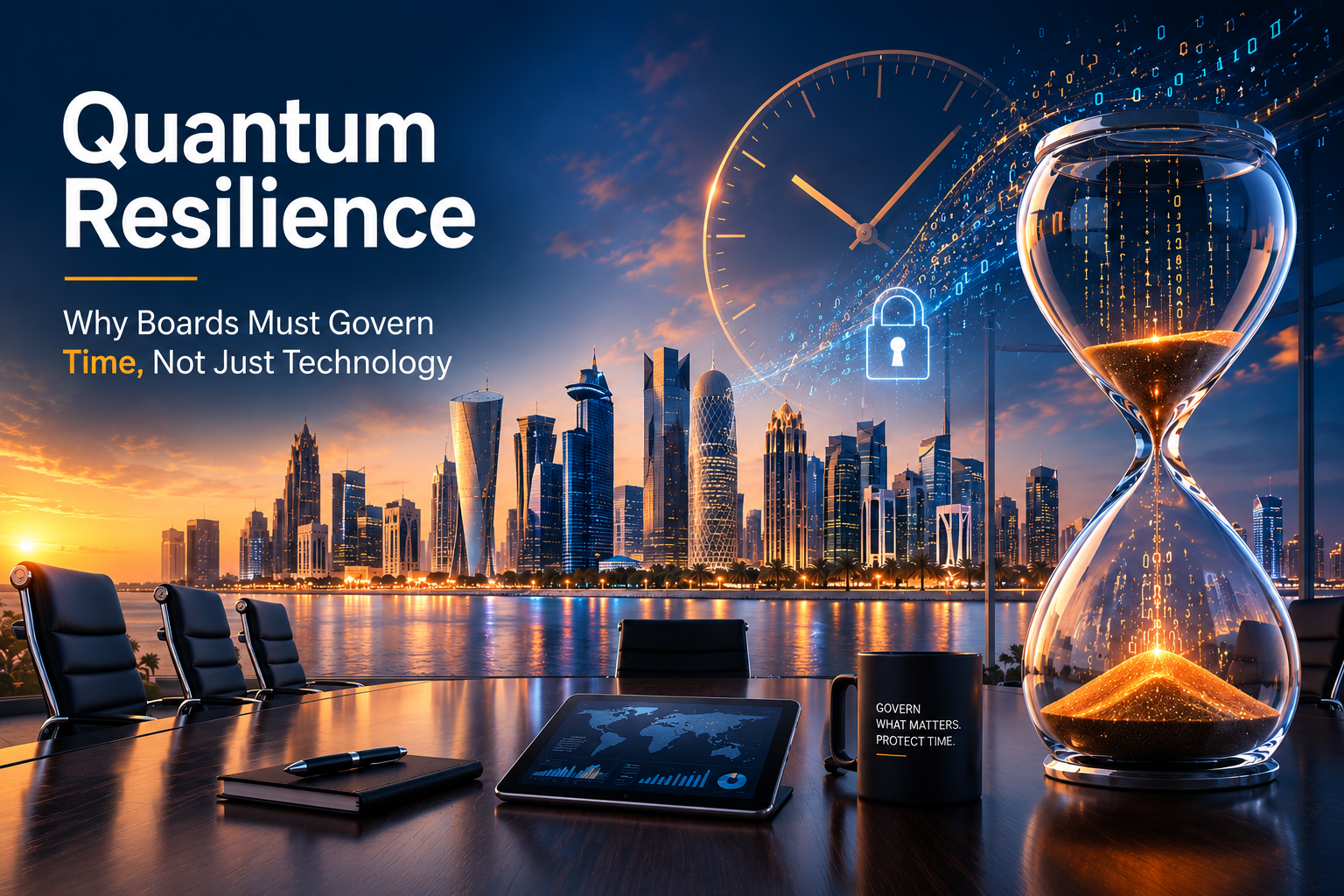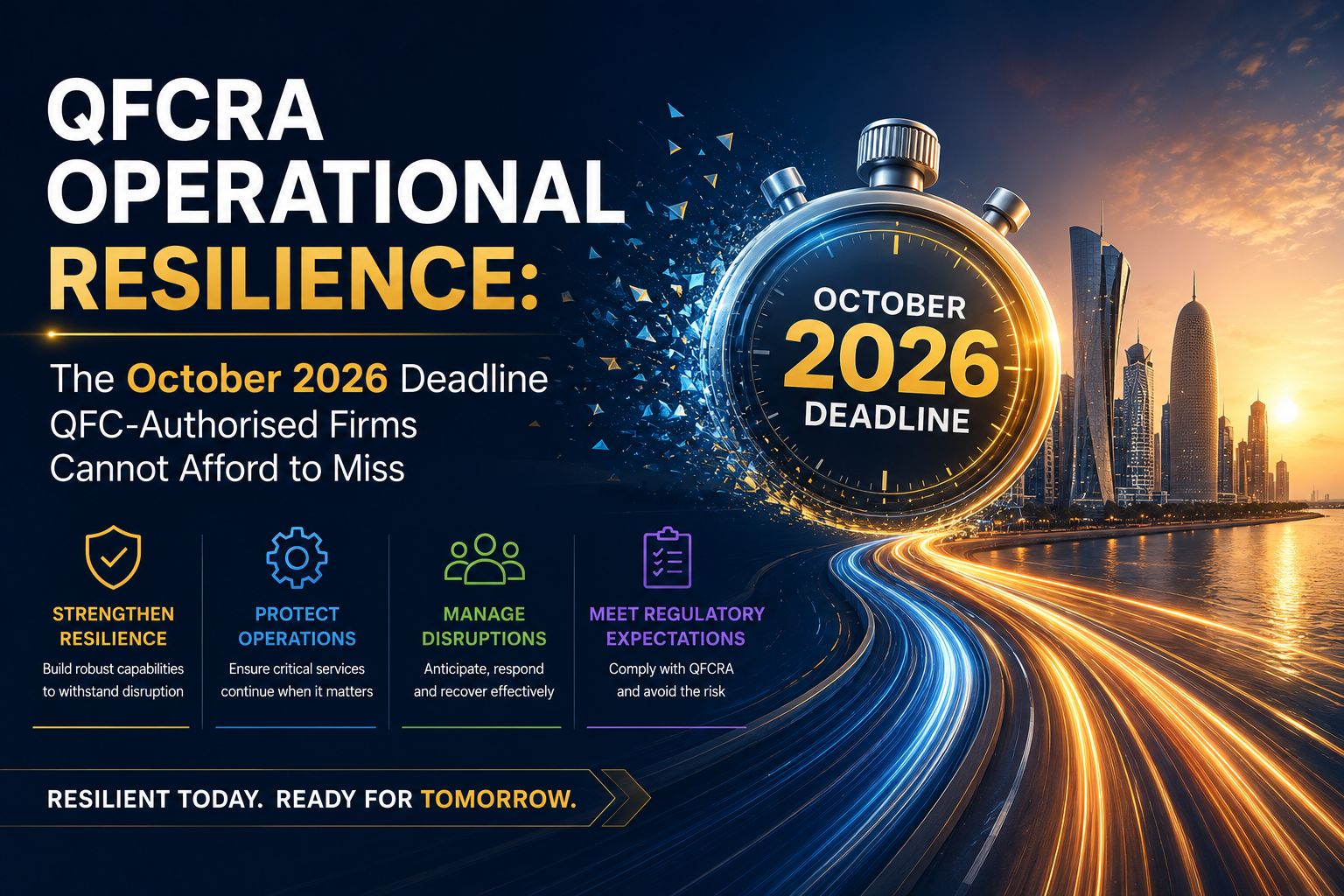

Geopolitical tensions can quickly translate into operational disruption for organizations operating in the Gulf and across global supply chains. Conflict, sanctions, transportation interruptions, cyber activity, and infrastructure pressure can all affect business continuity with little warning.
While geopolitical events are beyond the control of most organizations, the ability to maintain operational resilience is not. Organizations that have developed strong resilience capabilities are better positioned to absorb shocks, continue critical operations, and adapt quickly to rapidly changing conditions.
Operational resilience is no longer simply a compliance requirement or a business continuity exercise. It has become a strategic capability that determines whether organizations can maintain stability during periods of uncertainty.
Below are several key areas organizations should focus on to strengthen operational resilience during periods of geopolitical disruption.
1. Identify and Protect Critical Business Services
Operational resilience begins with understanding which services are truly critical to the organization’s mission.
Many organizations focus on systems or departments, but resilience planning should focus on critical business services — the activities that must continue even during disruption.
Organizations should identify:
- Essential services that must remain operational
- The systems, people, and third parties supporting those services
- Potential vulnerabilities that could disrupt service delivery
Protecting these services should become the central objective of resilience planning.
2. Strengthen Cyber and Technology Resilience
Periods of geopolitical tension often coincide with increased cyber activity targeting financial institutions, infrastructure providers, and government-linked organizations.
Operational resilience therefore depends heavily on technology resilience.
Organizations should ensure that:
- Cyber monitoring capabilities are continuously active
- Incident response teams are prepared for rapid escalation
- Backup and recovery systems are tested
- Remote access infrastructure is secure and scalable
Technology resilience is often the first line of defense in maintaining operational continuity.
3. Assess Supply Chain and Third-Party Dependencies
Geopolitical disruption can affect transportation corridors, logistics networks, and key suppliers.
Organizations should assess:
- Dependencies on critical suppliers
- Geographic concentration risks
- Alternative sourcing options
- Contractual resilience with key vendors
Understanding third-party exposure allows organizations to respond proactively rather than reactively.
4. Test Crisis Management and Decision Frameworks
In many organizations, crisis management frameworks exist but are rarely tested under realistic scenarios.
Operational resilience requires:
- Clearly defined crisis leadership structures
- Decision-making authority during emergencies
- Communication protocols across teams
- Regular crisis simulation exercises
Organizations that practice crisis response are far better prepared when disruption occurs.
5. Maintain Clear Internal and External Communication
Periods of uncertainty often create confusion across employees, partners, and customers.
Strong communication helps maintain stability and trust.
Organizations should ensure:
- Regular internal updates for employees
- Clear escalation channels for operational issues
- Consistent messaging to customers and partners
- Visible leadership engagement
Transparent communication is an essential component of organizational resilience.
Building Resilient Organizations
Operational resilience is not achieved through a single plan or policy. It is built through continuous risk awareness, strong governance, and regular testing of response capabilities.
Organizations that invest in resilience before disruption occurs are far better positioned to maintain stability when uncertainty arises.
In an increasingly complex global environment, operational resilience has become a defining capability for organizations seeking long-term sustainability and security.
About LAMAH Intelligent Solutions
LAMAH Intelligent Solutions supports organizations across the GCC in strengthening operational resilience, cybersecurity readiness, and enterprise risk management. Through our expertise in Digital Transformation, IT GRC, and Integrated Risk Management, we help organizations build the capabilities needed to operate confidently in complex and rapidly evolving environments.
This article is part of LAMAH Intelligent Solutions’ ongoing research on digital resilience, cybersecurity, and integrated risk management in an increasingly complex global environment.
=====================================================================================
Disclaimer:
The views and information expressed in this article are provided for general informational and educational purposes only and do not constitute professional, legal, financial, or investment advice. LAMAH Intelligent Solutions and the author(s) make no representations or warranties as to the accuracy, completeness, or suitability of the information contained herein and accept no liability for any loss or damage arising from reliance on it. Readers are advised to seek independent professional advice before making any decisions based on this content.